Research
My research centers host-parasite interactions, focused on mechanisms, disease outcomes, and ecology. I am especially interested in perspectives that integrate community dynamics within and between hosts, disruptions due to environmental shifts, and symbioses along the mutualist-parasite continuum.
I’ve run field and lab studies, collected phenotypic data from infection assays, analyzed genomics/transcriptomics, and built statistical models (Bayesian and frequentist). I am seeking to expand my abilities to integrate more evolutionary biology in my work and learn to competently collaborate with mathematical modelers and biological theoreticians.
Current Postdoc Research: Climate warming and coinfection interactions
How do complex disease interactions among hosts and multiple parasites or resident symbionts change across environments? Each of these players and their interactions with each other may respond to environmental shifts. 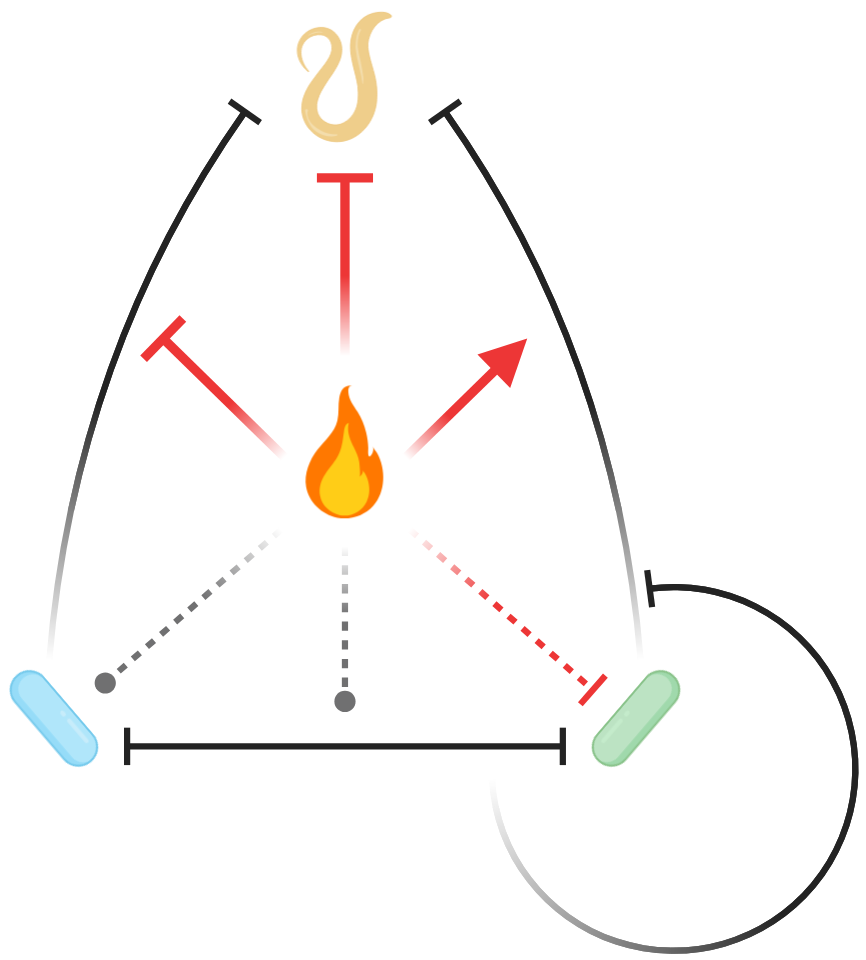 Predicting disease outcomes based only on one interaction, for example between one host and one parasite, may not capture realistic processes that drive variation in disease. To approach these ideas, I have been working with C. elegans nematodes and microbial parasites in the laboratory (UBC, with Dr. Kayla King). We have analyzed host gene expression responses to novel parasite invasion in hosts carrying a resident microbiome and hosts benefiting from parasite-parasite competition. Taking these naturally coinfection competitor microbes (Leucobacter), we have tested host outcomes across temperature. Here, found that strong temperature-driven shifts in host-parasite interactions did not always coincide with similar shifts in parasite-parasite interactions – meaning that coinfections essentially dampened the effects of temperature changes. This work is currently being extended with additional host RNAseq and collaboration with a mathematical modeler.
PhD Research: Mechanisms of parasitic behavioral manipulation
My PhD research focused on revealing the molecular basis of parasitic behavioral manipulation by a species of Ophiocordyceps, or “zombie ant fungus” (UCF, with Dr. Charissa de Bekker). 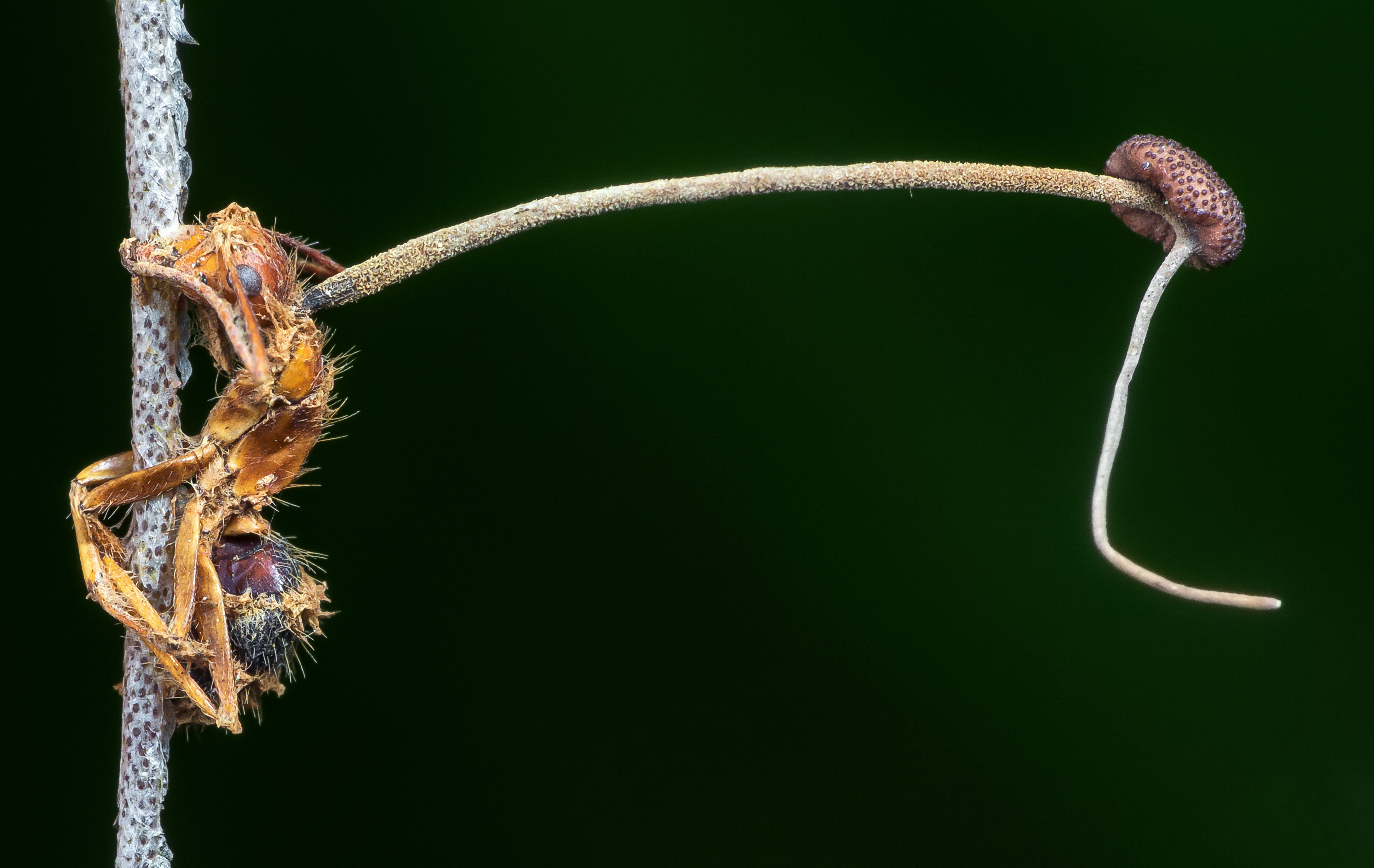 To delve deeply into the biology of this emerging non-traditional study system, we performed the first analyses on the genome, transcriptome, metabolome, and in silico-protein-interactome for this species. Additionally, we statistically analyzed environmental and natural history data from wild populations of this fungal parasite, to connect life history to environmental and ecological factors. Photo: Danny Gooding
MSc Research: Molecular and cellular biology
During my Master’s under Dr. Magdalena Götz (Ludwig-Maximilians-Universität, Germany) my thesis was on neural stem cell biology in mice. I also had a few lab rotations and accumulated a variety of molecular techniques with cells, worms, and flies. I had come expecting to continue my focus on organismal-level ecology, but due to a twist of fate after arriving, I ended up becoming a bit of a lab rat. And lucky that - the molecular and genetic world of biology really opened up for me here. Not to mention meeting my future PhD advisor while she was postdocing at the university.
BA Studies & Postgrad Work: Field ecology
At the earliest stages of my career (BA at the University of California – Berkeley, USA and postgraduate work), I worked on multiple field eco-evo projects across various global locations – from guppy evolution to ant-plant behavioral ecology. My final semester at Berkeley was actually abroad at the Mo’orea Gump Station, where I devised an independent research project studying ectoparasitic snails on sea cucumbers. This experience launched me into wanting to pursue fundamental eco-evo research (and to keep traveling to new places to work!).